 Ragaventhra Systems
Not all knowledge deserves the same capture effort.
Companies often respond to an employee departure by asking for a list of tasks or a handover document. That records activity, but critical knowledge usually sits deeper: how exceptions are judged, which relationships matter, where errors begin, what quality looks like and which warning signs an experienced person notices early.
NASA’s knowledge-management work focuses on critical knowledge—knowledge essential to informed decisions and mission success that is difficult to replace. The same principle applies to growing businesses: prioritise what would interrupt customers, quality, cash, compliance or production if it disappeared.
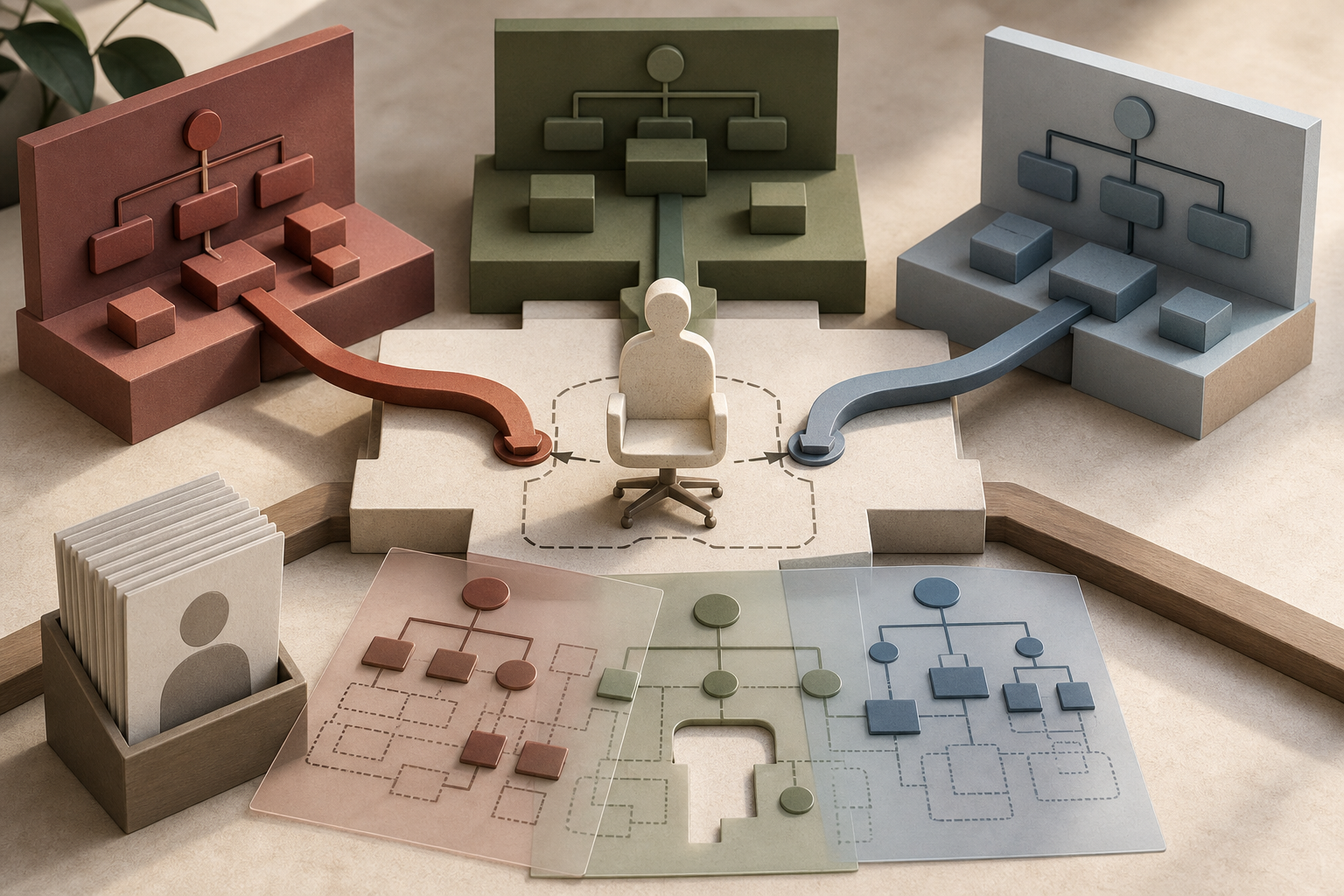
A continuity system has four stages.
- Identify: map the decisions, relationships and specialised tasks concentrated in one person.
- Capture: use interviews, demonstrations, examples, templates and recorded walkthroughs.
- Transfer: assign a receiving owner and let that person perform the work.
- Validate: observe execution, correct gaps and update the standard.
A document created on the final working day completes only the capture stage. Continuity requires transfer and evidence that the receiver can operate independently.
Capture the judgement, not only the sequence.
Useful continuity assets can include a process guide, decision tree, client or vendor context, quality reference, exception register, calendar of recurring obligations, templates and examples of completed work.
For skilled or craft-based work, photographs, annotated examples and side-by-side quality comparisons may communicate more than written instructions. For relationship-heavy roles, the context of the relationship and the next expected action matter as much as the contact details.
ISO 30401 treats knowledge management as a system that must be established, maintained, reviewed and improved. That is a stronger model than storing files in a folder and assuming knowledge has been transferred.
A leadership continuity test
- Which employee absence would make current work invisible?
- Which customer, supplier or quality decisions depend on personal memory?
- Who is the receiving owner for each critical knowledge area?
- Has the receiving person performed the work under observation?
- Where will the current standard be maintained after the transition?
Knowledge continuity is complete when the organisation can reproduce the outcome—not when the departing employee has submitted a document.
Research base
This insight combines Ragaventhra Systems’ operating-architecture methodology with the following external sources. Findings are used within their original scope and are not presented as promised client outcomes.