 Ragaventhra Systems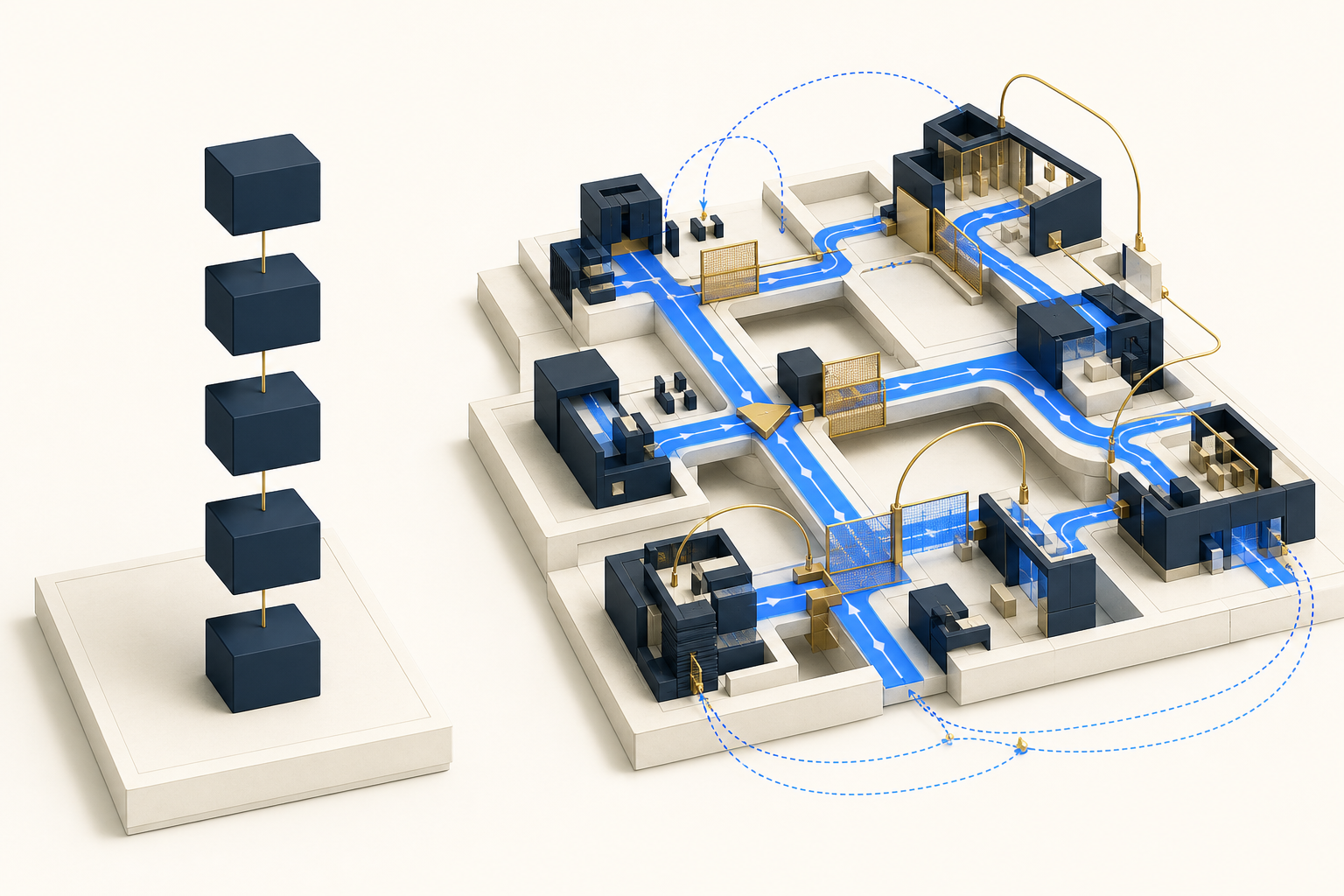
Hierarchy answers only one question.
An organisation chart answers: who reports to whom? That matters, but most operating failures happen outside that single relationship. A delayed customer order may involve sales, production, purchasing, quality and finance. No reporting line explains how those teams should hand work over, resolve a conflict or escalate a risk.
When leadership treats the chart as the complete design, employees fill the gaps through habit. Responsibilities overlap, managers protect their own departments and cross-functional work depends on whichever person is willing to coordinate it.
A functioning operating model has five connected layers.
- Structure: the roles and reporting relationships.
- Outcomes: what each role or department is accountable for producing.
- Decision rights: who decides, who contributes and who approves.
- Work and information flows: how inputs, handoffs, records and exceptions move.
- Governance: how performance, risks and unresolved decisions are reviewed.
Change one layer and the others may need to change with it. Combining two positions, for example, affects workload, authority, reporting, KPIs and escalation coverage—not merely the title printed inside a box.
Design roles around business outcomes before assigning names.
Organisation discussions easily become personal: who deserves a promotion, who is trusted, who has been present longest or who is available today. A more reliable sequence is to define the operating need first.
What result must this position own? Which decisions must it make? Which teams depend on it? What information must it produce? What capability does it require? Only after those questions are answered should leadership assess whether a current employee, a new hire or a combined role can meet the requirement.
This does not make organisation design impersonal. It makes the decision fairer and easier to explain because people are assessed against an agreed role rather than a role being invented around a person.
A practical operating-model test
- Can every critical outcome be assigned to one accountable role?
- Are cross-department handoffs visible?
- Are routine and exceptional decisions separated?
- Can leadership see performance without asking each person individually?
- Would the structure still work if one current employee left?
If the chart cannot answer these questions, it is a useful picture—but the operating model still needs to be designed.
Research base
This insight combines Ragaventhra Systems’ operating-architecture methodology with the following external sources. Findings are used within their original scope and are not presented as promised client outcomes.